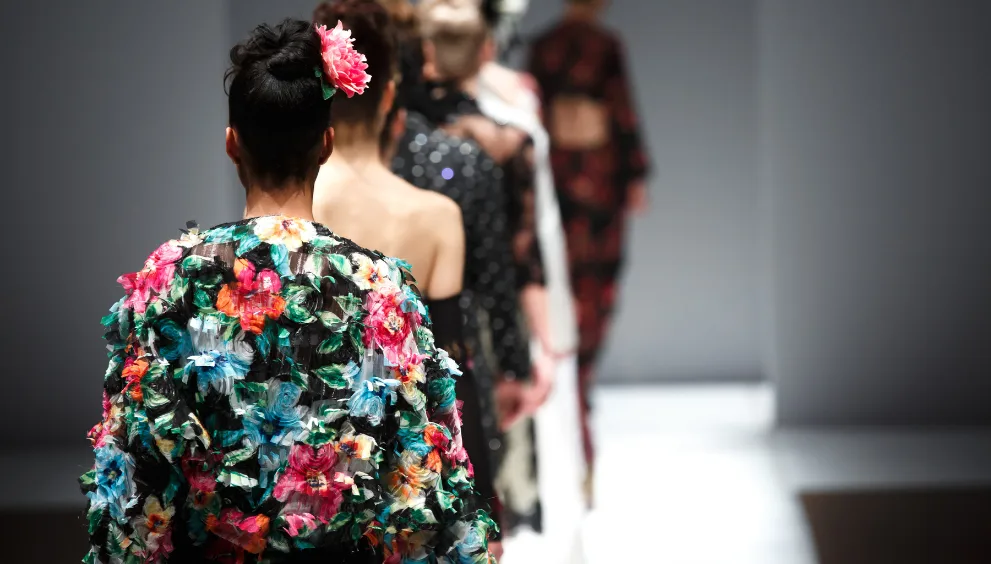
Fast fashion is not merely a business model, but it is also an attitude. It is all about hurry rather than substance, more than the quality of it, trends rather than classics. However, as the rights of the consumer become increasingly aware and government bodies increase in regulation, a question is being posed earnestly by many brand names: How do we change, and not be irrelevant, or lose revenue?
The good thing is, being slower does not imply reducing. It means building smarter. Here’s how to begin.
Redefine What “New” Means
The industry of fast fashion is built on the principles of constant drops, weekly releases, and endless variety. The way out of that cycle is to begin defining what new looks like.
Rather than 12+ collections/year, concentrate on fewer, more powerful releases. Elevate storytelling. Implement restricted capsules of definite themes and duration. Make something new about something design-innovative or something fabric-developed – not merely another color-way of a silhouette.
Scarcity builds desire. Deliberateness generates allegiance.
Design in a Long Vibrant Fashion
When a garment is intended to be worn five times and posted on Instagram once, it is a part of the problem.
Place your design process priority on:
- Higher-quality fabrics
- Reinforced construction
- Timeless silhouettes
- Versatile styling
A new question for your design team: Will anyone want to be wearing this in three years?
Rethink Your Supply Chain
Fast fashion is based on short-term schedules and the reduction of costs at every stage. Transparency is not an option to evolve.
Start by:
- Auditing suppliers
- Cutting down the volumes of production.
- Forging more long-term factory relationships.
- Venturing into local or in-shore production.
Supply chains propelled by speed tend to conceal inefficiencies. Decelerating will enable superior predicting, less waste, and improved connections – which will preserve your bottom line.
Produce Less – Sell Smarter
One of the largest financial as well as environmental burdens of fast fashion is overproduction.
Consider:
- Small-batch production
- Pre-order models
- Inventory planning based on data.
- Bespoke services on core products.
Markdowns are reducing, waste is reducing, and brand value is improving when demand is produced rather than based on guesswork.
Less excess, more intention.
Turn Sustainability Structural and not Marketing
Green capsules and recycled-polyester collections will not make a difference to your brand when the basic model is the same.
Rather than single sustainability-focused edits, incorporate sustainability into:
- Material sourcing
- Packaging decisions
- Logistics
- Timelines of product development.
Get out of the trend-based sustainability and into the systems-based sustainability. Customers are able to notice the difference.
Invest in Circularity, Resale, and Repair
Wish you could really get out of fast fashion? Increase the life cycle of your product.
Introduce:
- In-house repair services
- Take-back programs
- Resale platforms
- Upcycling initiatives
When you make clothes to return, not discard, you create a long-term ecosystem and not a short transaction. Circular models are not only ethical. When they are strategically done, they are profitable.
Re-educate Your Customer
You conditioned your audience to be in anticipation of constant drops and low prices. Now you have to retrain them.
Communicate clearly:
- The reason behind the lower occurrence of collections.
- Reasons why prices can indicate better quality.
- What has happened to your production processes?
Transparency builds trust. And faith is the power of endurance.
Change Internal KPIs
And this is the most difficult step (and the most important).
In case your teams continue to be measured on:
- Units produced
- Speed to market
- Weekly trend output
You will never part ways with fast fashion.
Introduce new metrics:
- Unmarked down sale rates.
- Product lifespan
- Customer retention
- Minimizations of the environmental impact.
As long as there is a shift in incentives, the behavior comes in line.
The Competitive Advantage of Slowing Down
It is not just about who is able to manufacture the most, but rather who is able to manufacture the smartest, as far as the future of fashion is concerned.
The brands that leave the fast fashion bandwagon behind benefit:
- Stronger brand identity
- Higher perceived value
- More loyal customers
- Lower long-term risk
It is not a matter of foregoing growth. It’s about redefining it. In 2026 and further on, the speed alone is not impressive. Substance is. And the brands that realize that change is not to be outlived by merely existing will be at the forefront.