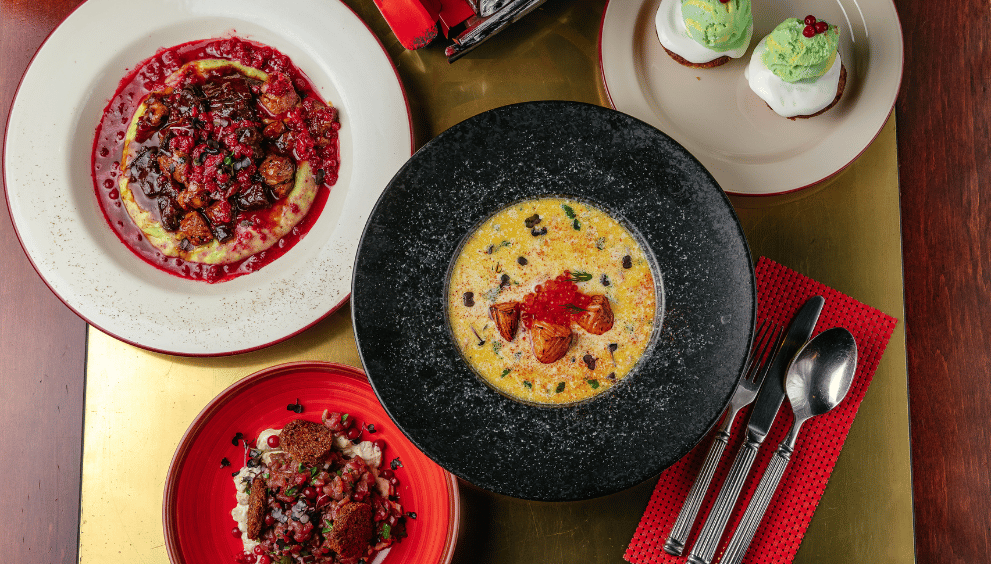
A Michelin star has something mythical about it. A single star, or two, or with great fortune three and a cook will become a legend, a restaurant will become a place of pilgrimage, and a mere dish will become a legend which everyone will tell every year.
But what is going on behind those smooth kitchen doors? What is it that it requires to make a plate of food magic?Spoiler alert: it’s not just fancy ingredients or aesthetic plating. It is obsession, exactness, imagination and a dose of insanity.Welcome to the hidden world where Michelin dreams are made (and sometimes broken).
Precision Like You’ve Never Seen
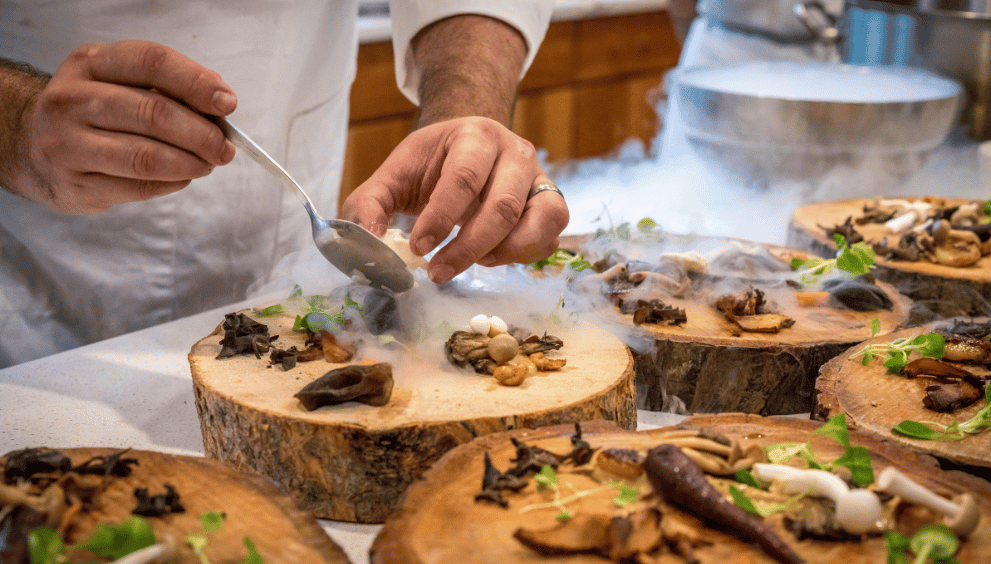
Step into any Michelin-starred kitchen – whether it’s Gordon Ramsay’s flagship in London, and the first thing you notice isn’t chaos, like you’d expect from most kitchens. It’s precision. Every slice, every sizzle, every swift movement has intent behind it. Chefs move from station to station with laser focus, speaking in quick, clipped phrases – and sometimes, saying nothing at all because a simple glance is enough.
In these kitchens, consistency isn’t a goal. It’s a religion. The salmon must be seared the same way, every single night. The jus must hit the same glossy, decadent note every time. If a plate isn’t perfect – and we mean perfect – it doesn’t leave the pass. And it’s not just the executive chef watching. Michelin inspectors, those mysterious, anonymous diners, could be sitting at Table 7 at any moment, ready to turn dreams into reality-or heartbreak.
The Art of Obsession
When you inquire any Michelin starred chef of what it takes to achieve it, they will most probably give you a similar answer: Dedication. Or better said an over-indulgence in obsession. An interesting example would be the much-decorated Chef Hélene Darroze whose two Michelin starred restaurants in London, Hélene Darroze at The Connaught, are a shrine of perfect technique and emotional narration.
Or consider such a person as René Redzepi of Noma fame who made foraging an art and redefined the meaning of the words local ingredients.(Yes, he once served moss. And yes, it was delicious.) For these chefs, food isn’t just food. It’s philosophy. It’s life. It’s a language they’re constantly trying to master – even when they’re already considered the best. And that’s the real secret: the best never think they’ve made it.
Kitchens That Feel Like Laboratories
When you are inside one of the world’s top kitchens, “experiments” are not merely side projects; they’re a part of your day to day life.Ever heard of Grant Achatz at Alinea in Chicago? He’s basically a culinary mad scientist. His team doesn’t just cook – they invent. They question everything. Why can’t a dish be eaten off a balloon? Why can’t you turn a campfire into a course?
Meanwhile, Massimo Bottura famously asked: What if a lemon tart were intentionally smashed and served that way? The question then gave birth to his now-famous “Oops! I Dropped the Lemon Tart;” which exemplifies the ideal way Michelin-starred chefs go beyond the limits, break the rules, and bring fun to fine dining. Creativity does not come as an afterthought in such kitchens. It’s the fuel.
The Pressure Cooker
Of course, with all this magic comes… intense pressure. (And yes, occasional shouting matches.) Hours are brutal. Mistakes may seem disastrous, with no room for mistakes.
Even Gordon Ramsay, king of kitchen intensity, has admitted how gruelling it was chasing his first stars. And stories of top chefs stepping away for mental health reasons are becoming more common – a reminder that behind the glamour, this life demands everything.
To people able to work here, the payoff is incomparable: they know that each night they are making something that will disappear and be forgotten. Something that makes people feel in a way that a simple meal will hardly do.
Why We’re Still So Obsessed
Fundamentally, Michelin-starred kitchens are among the remaining purest arenas of pure craftsmanship in food. In a society where everyone is in a hurry to get meals cooked faster, get quick solutions and unlimited shortcuts, these chefs are voluntarily slowing down. They are not following the new trend in food, they are following tastes, feelings, finishes. It makes us remember that food is not only something to live on but it is art, it is magic.
And sure, most of us probably won’t find ourselves dropping $500 on a tasting menu anytime soon. But somehow, just knowing that out there, someone is caramelising a sauce to glossy perfection or plating a dish like a tiny, edible universe – it’s weirdly comforting.
It reminds us that passion still matters. That craft still matters. That excellence seeking, nevertheless tiring, is one of the most human things that we may do. And that, perhaps, is the actual Michelin-starred magic.