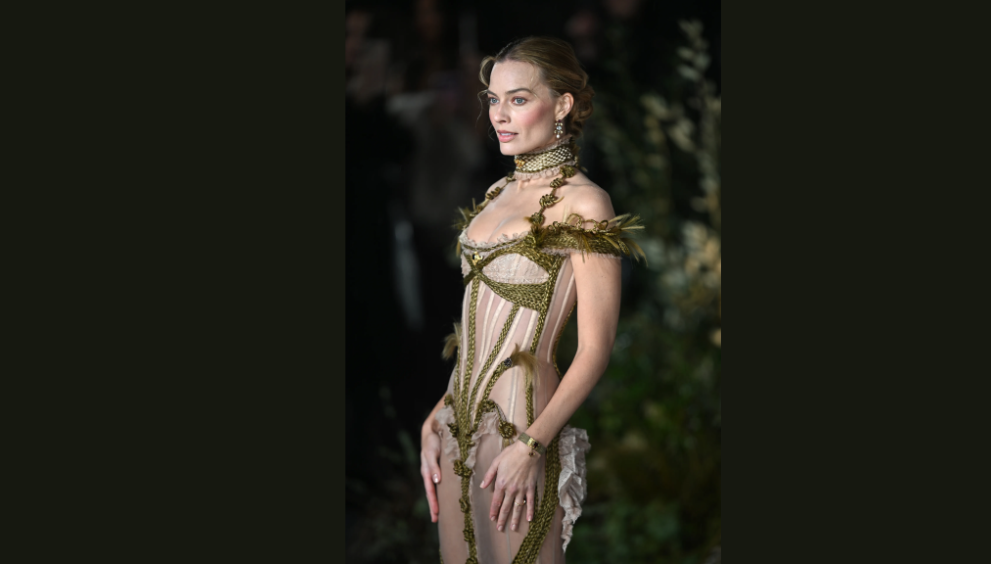
Clothes were worn once on a red carpet by actors. Nice clothes, but mostly true to themselves. Next came the method of dressing: the habit of actors matching their press-tour clothes with the character they are portraying. Fashion then suddenly became integrated into the performance. And no one has mirrored this transition more vividly, or more provocatively, than Margot Robbie.
Robbie was not simply marketing a movie on the Barbie press tour; she became Barbie in public. Vintage Versace. Bubblegum pinks. The classic doll looks directly replicated. It was happy, thorough, and could not be overlooked. It also brought up an issue that continues to reverberate in Hollywood dressing: is this genius as a way of telling a story, or is it silently ensnaring actors in one box of aesthetics?
When Fashion Becomes World-Building
The best method of dressing is movie marketing at the level of genius. The appearance of Barbie dolls worn by Robbie was not a bunch of accidents but Easter eggs. Every appearance was a reward to the fans who spotted the reference to a doll or a nod to pop history. Fashion was a common language among the actor, audience, and character.
This form of dressing makes the movie go beyond the screen. Press tours are transformed into escapades; Instagram is included in the story world. In an era where films are competing not only with other movies but with everything, method dressing is an ingenious approach to making a splash. It is not an interview you are watching, but instead, you are still in the world of the film.
And let’s be real: it’s fun. It brings a sense of playfulness back to the celebrity culture, which otherwise seems too structured and sterile. Method dressing declares, “We are having a laugh at the joke–and we like it.
The Margot Robbie Effect
The success of method dressing can also be its largest issue, though, in the case of Margot Robbie.
Since something succeeds that much, it is soon established as an expectation. Barbie had changed the way Robbie dresses; her dressing was no longer about the clothes; it was a statement. Any glance would be examined in meaning. Was she still Barbie-coded? Was she moving on too fast? Was the magic gone?
And there is where the danger lies, in that method of dressing may unconsciously distort the image of an actor, at least when it comes to women. They are not perceived as well-rounded artists, but they run the danger of being remembered as having had one ideal aesthetic epoch. The pink radiance is difficult to disturb.
That means: the costume that is longer than the character begins to stifle originality.
Branding vs. Breathing Room
Nowadays, actors are not performers, but brands. Method dressing fits very well into that ecosystem. It is graphic, infectious, and can be easily digested. Stylists are able to plunge into narrative integrity in planning complete tours. Fashion houses receive definite themes. Everyone wins.
Except, sometimes, the actor.
Method dressing has a tendency to push out individuality. Every appearance is required to serve the film, which results in decreased spontaneity, lack of experimentation, and lack of contradiction. The red carpet becomes a monotony. The individual below begins to fade away.
And to the viewers, this may make the magic wearisome. When all the roles are surrounded by a hyper-curated aesthetic package, then there is no surprise. We start anticipating the appearance preceding the performance. Fashion ceases to be receptive to the agent and begins to dictate to them.
Is the End the Means–or the Requirement?
One wonders, is method dressing itself the problem or the pressure to never leave the character?
Method dressing is like acting when it is done only occasionally. When it is enforced, it seems more like cosplay with a contract. The happiness is emptied as actors are not permitted to mess with, contradict, or stray from the theme.
Margot Robbie is not the villain in this case; on the contrary, she is evidence of the strength of such an approach. The actual risk is to make a creative decision into an industry norm, which, in particular, should not favor women, as they are already supposed to convey the meaning through their looks.
So… Elevation or Erosion?
The solution, irritatingly, is both.
Method dressing has the ability to take cinema to a new level by making films come to life outside the screen. It has the potential to make the audience immersed and transform fashion into storytelling. However, when abused, like using it too hard, or imposed on too strictly, it might kill originality through pinning actors into visual personas that they never intended to inhabit permanently.
The sweet spot? Freedom
Allow actors to immerse and come out of character. We want Margot Robbie to be wearing pink head-to-toe and appearing the following day wearing absolutely nothing that is not Barbie-like, just because she wants to.
Anyway, the most captivating performances, whether on the screen or on the red carpet, are those that allow for being surprised.