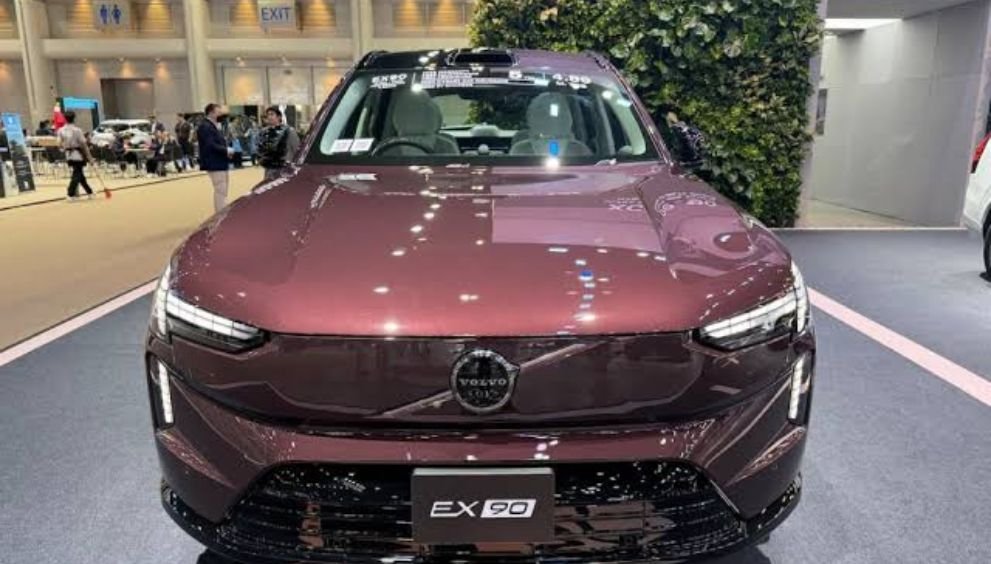
Something is about to happen big in the EV world – and Sweden is the one to do it. The Volvo EX40, the commonplace Volvo compact electric SUV, is taking the form of what will otherwise be one of the most promising Volvo electric cars to date. Why? Strong industry indications that it will be based on a new platform known as SPA3 and has the potential of using LFP (Lithium Iron Phosphate) batteries, which would be a significant change of the EV strategy adopted by Volvo.
To simplify this, and to make it important, we will deconstruct it into common language.
What Is the SPA3 Platform?
The abbreviation for Scalable Product Architecture is SPA -the construction system of cars in Volvo. Imagine it as a bendable blueprint that will enable the company to construct various cars with similar parts. Volvo does not have to invent each model, but can reuse and modify essential structures and save time, finances, and engineering work.
The next significant development of this system will be the next SPA3. It is specifically made to suit the next-generation electric cars. In comparison to the older platforms, SPA3 must:
- Reduce manufacturing costs
- Make better battery and motor integration.
- Permit the rapid software upkeep and enhanced connectivity.
- Flexible support of various vehicle sizes.
Put simply, SPA3 is the future of Volvo in terms of technology. And the EX40 may be among the first of the major models to take it.
The importance of the LFP Battery Shift
The most significant thing about an electric vehicle is battery chemistry. It has an impact on cost, safety, lifespan, and driving range. Volvo has so far been majorly engaged in the use of NMC (Nickel-Manganese-Cobalt) batteries. These batteries are characterized by high energy density, i.e., they are able to store much energy within a small area. In most cases, that equates to increased driving range. Nevertheless, there is an increasing trend in the popularity of LFP (Lithium Iron Phosphate) batteries throughout the industry – and this makes sense.
Advantages of LFP Batteries
More stable, thermally, and safer. More protracted cycle life (they decay more slowly with time passing)
- Lower production costs
- Work with more easily accessible materials.
- Trade-Offs
- Little reduced energy density than NMC.
Provide a little less variety in similar installations. When Volvo launches LFP batteries in the next-generation EX40, it might provide its consumers with a cheaper alternative of the SUV without reducing safety and performance. One more option is that Volvo can provide both LFP and NMC, as well as leave the choice to a buyer between affordability and the widest possible range.
What This Means for Buyers
Considering that the next-gen EX40 may indeed transpose to SPA3 and become LFP-battery-equipped, here is the rationale of why it matters so much:
- More Competitive Pricing: LFP batteries are cheaper to make, and SPA3 will simplify the production process. Combined, the changes may enable Volvo to lower the total cost of the EX40 and make it more affordable in a highly competitive EV market.
- Higher Reliability Over the Long-term: The batteries of LFP are reputed to be durable. They are able to undergo more charge cycles before they become degraded. This is a convenient thing to everyday drivers who charge their vehicles on a regular basis.
- Better technology Integration: SPA3 should introduce more powerful software. It might imply quicker infotainment, enhanced driver assistance, and fewer issues with updating over the air – all the aspects that contemporary EV consumers are accustomed to.
A Strategic Move for Volvo
Volvo has made it publicly known that it plans to be a fully electric brand by 2030. In order to achieve that objective, it should have scalable technology and low-cost battery solutions. The platform flexibility is offered by SPA3, and LFP has a viable battery chemistry on a large-scale model.
This change also puts Volvo in line with the general industry trends. LFP batteries are becoming the choice of many automakers, particularly for entry-level and mid-range EVs. Volvo seems to be making the EX40 a technologically sophisticated and cost-effective car by integrating SPA3 architecture and LFP chemistry.
The Bigger Picture
The new EX40 will not be a simple make-over version. It appears to be a base upgrade – one that may come to shape the way Volvo develops the future of its electric production.
Should this be confirmed, the SPA3 and LFP combination points to a smarter, more efficient change of direction of the EV strategy of Volvo. It demonstrates that the company is not only pursuing the performance figures but also is able to emphasize the sustainability, affordability, and long-term value.
For the consumers, there would be fewer electric cars that are difficult to reach, with faulty battery technology and highly advanced platforms under the hood. The new-generation EX40 may not only be a revamp, but a breakthrough to the next phase of EVs at Volvo.