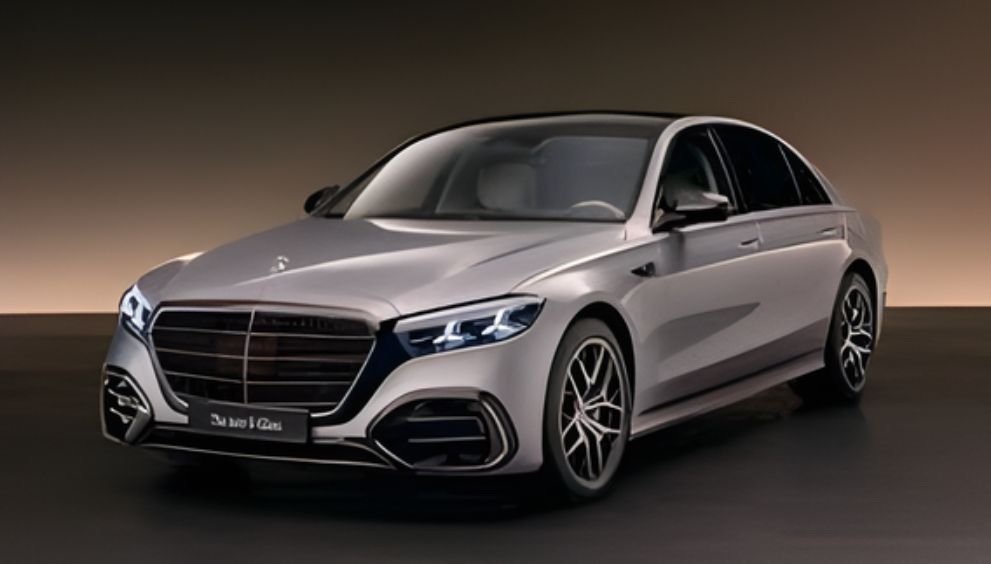
When Mercedes-Benz declared that it would make a shift towards going luxury-first, it was not merely a marketing line; it was redefining the DNA of one of the most recognizable car manufacturers in the world.
It is an easy plan to follow: produce fewer cars, specialize in higher-end, increase margins, and double-up on prestige. But in practice? It is a game of high stakes in balancing that might rewrite the future of the brand.
So what exactly is on the line?
A Shift From Volume to Value
Mercedes enjoyed years of success across the breadth, from small sedans to extreme luxury limousines. The company is now shifting to the most lucrative markets, which are the premium models such as S-Class, Maybach trims, and the high-performance AMG models.
The logic is clear:
- Customers who are luxurious are not price-sensitive.
- Getting its high-end models creates higher margins.
- Brand cachet is improved by exclusivity.
However, to move out of the entry-level means to give up volume – and possibly young buyers who used to view a C-Class as their point of entry into the Mercedes brand.
This isn’t just about cars. It is the loyalty to the brand in the long-term.
Protecting the Crown
Mercedes has been in the high-end segment with BMW and Audi. The strategy of luxury-first moves it a step closer to ultra-premium, getting to the same space as products such as Porsche.
With that height comes, of course, opportunity–and danger. When done properly, Mercedes reinforces its reputation as the gold standard of contemporary luxury. When wrongly calculated, it will lose competitiveness in the competitive middle-range markets and will fail to capture the ultra-luxury customers who want something more exclusive. Luxury customers are insistent. They desire advanced technology, perfect manufacture, and emotiveness – all in one.
The EV Question
Electrification, then there is. In its quest to increase its electric portfolio under the EQ banner, Mercedes has to answer a big question: Can luxury go seamlessly into the EV age
Electric cars are frequently evaluated based on their range, software, and speed of charge, and as such, are evaluated by car manufacturers, tech companies, and recent ones that are fast-moving. In the case of Mercedes, it is the task to unite the innovation of a digital nature with the craftsmanship of the past world.
Luxury-first bet presupposes customers to pay a premium to get:
- Sophisticated design
- Hyper-personalized interiors
- Highly automated driver-assist systems.
- The smooth digital ecosystem.
The premium becomes more difficult to justify in case the tech lags.
Economic Headwinds
Luxury brands are less susceptible to recessions than mass-producing manufacturers – although they are not absolutely safe. Mercedes has a gamble that is influenced by global economic uncertainty, demand in China changing, and the changing U.S. consumer behavior. The narrowing down of the focus exposes the company to the changes in the prices of high-net-worth spending patterns. That is, the smaller the number of cars, the more important they are.
The Brand Identity Tightrope
This is the emotional part of the bargain. Mercedes has been the synonym of aspiration – the concept that there is a symbol of success. The three-pointed star had a meaning, whether to the executives or to the first-time luxury buyers. However, in the event that entry models are more scarce or more costly, will the brand become inaccessible? Does it become more distant? Desire can be enhanced by exclusivity. However, distance reduces relevance too far. The plan is based on the principle of keeping aspiration up to the minute and not alienating it.
What Success Would Look Like
In the event that the luxury-first strategy is effective, Mercedes can:
- Enhance operating benefits greatly.
- Build its international image.
- Lead the luxury EV market
- Streamline its products.
- Build a greater halo effect over its portfolio.
It would imply getting thinner, sharper, and arguably more potent as a symbol of luxury.
What Failure Could Cost
In case it collapses, the following are some of the risks:
- Fed up with market share in the major segments.
- Less brand loyalty among the younger consumers.
- Greater rivalry with BMW, Audi, and Porsche.
- Fights to support the high prices of EVs.
- Dependence on a smaller group of customers.
In a rapidly changing auto industry, mistakes are multiplied within a very brief time.
The Big Picture
The core of Mercedes’ luxury-first strategy is confidence. It is a statement that goes: We do not have to compete everywhere, but we will compete where it counts most. But confidence in business is never without consequence. Whether doubling down on prestige cements the three-pointed star will become apparent in the coming years, or whether the journey will get more dangerous than originally anticipated, due to making the road ahead narrower. It is one thing that it is not merely a product strategy. It is one of the chapters in the future of Mercedes-Benz.